

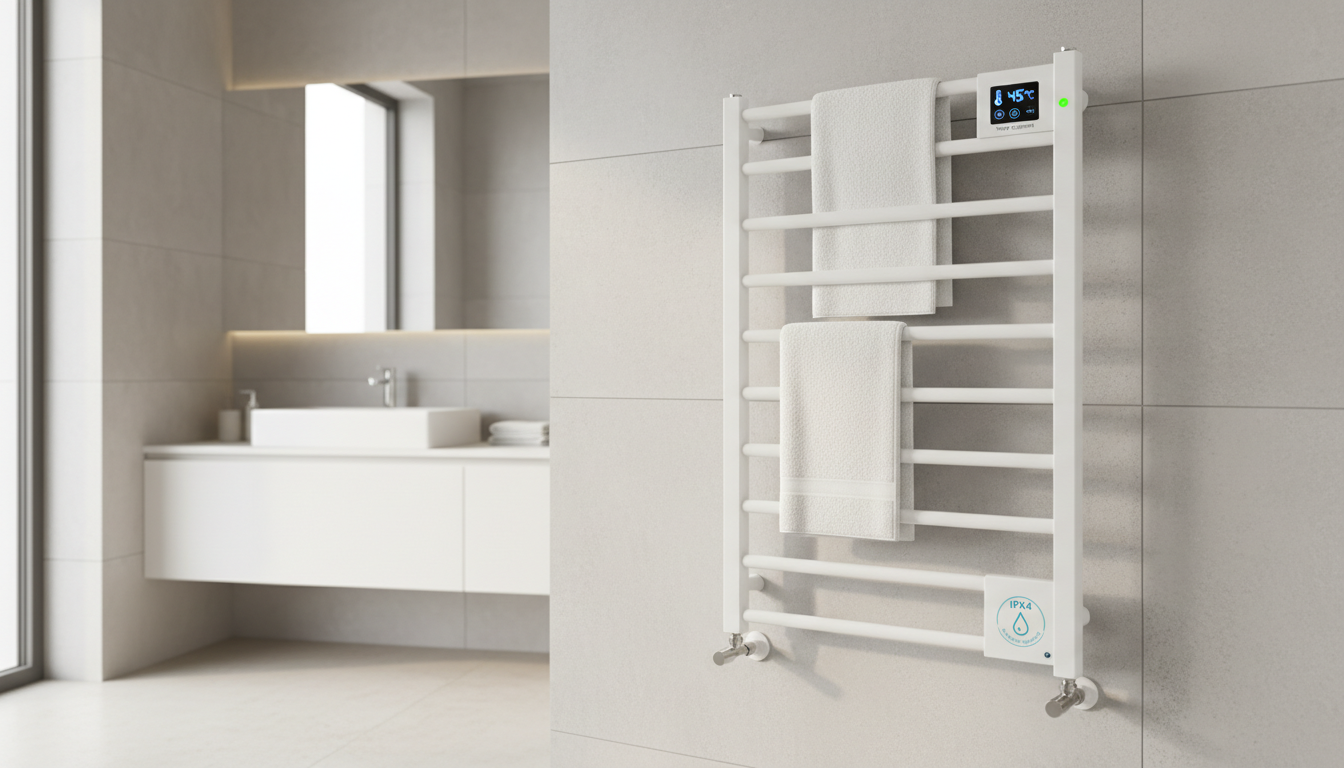
How Do Heated Towel Racks Work?
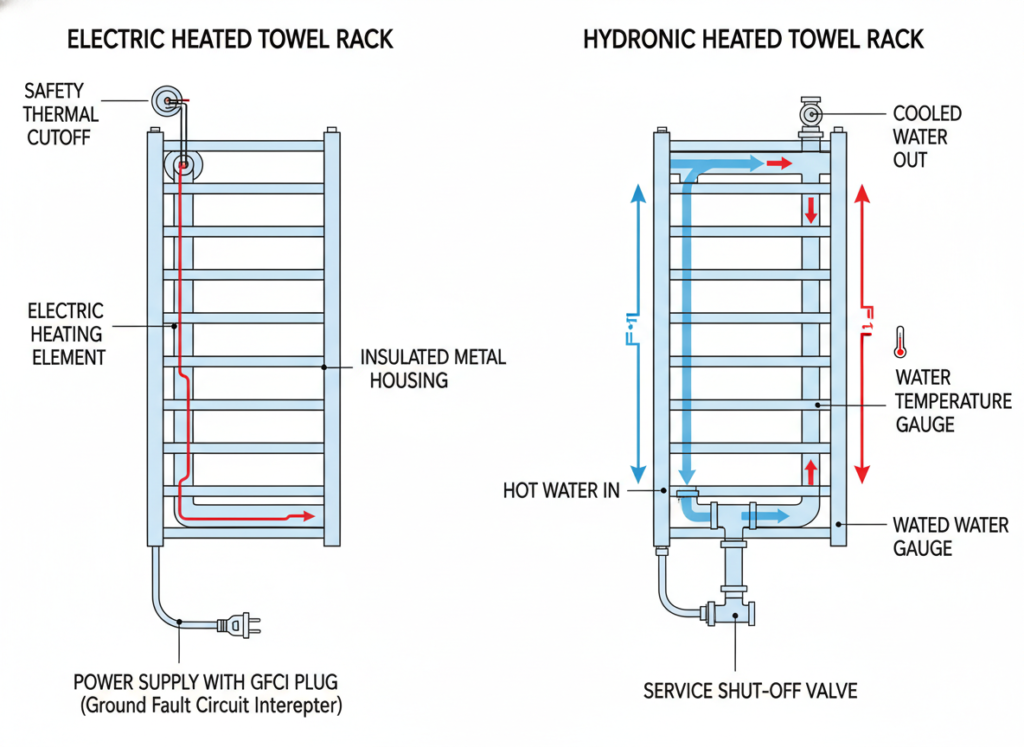
Before diving into safety features, it helps to understand how these devices function. Heated towel racks work through one of two primary heating methods:
Electric Towel Warmers
These units contain an internal heating element powered by electricity. They heat up quickly, typically reaching optimal temperature within 15-30 minutes. Most electric models operate at a constant, safe temperature around 100-140°F (38-60°C).
- Quick heating time (15-30 minutes)
- Easy installation options (hardwired or plug-in)
- Energy-efficient (typically 60-150 watts)
- Independent operation from home heating system
Hydronic Towel Warmers
These connect to your home’s hot water or hydronic heating system. Water circulates through the rack, providing consistent heat. They often produce more heat than electric models and can help warm the bathroom space.
- Higher heat output (typically 1,000+ BTUs)
- Consistent temperature when system is running
- No direct electricity in the bathroom
- Integrates with existing heating systems
Essential Safety Features of Modern Heated Towel Racks
Modern heated towel racks include several built-in safety features that make them suitable for bathroom use. When shopping for a towel warmer, look for these important safety elements:
IP Rating Protection
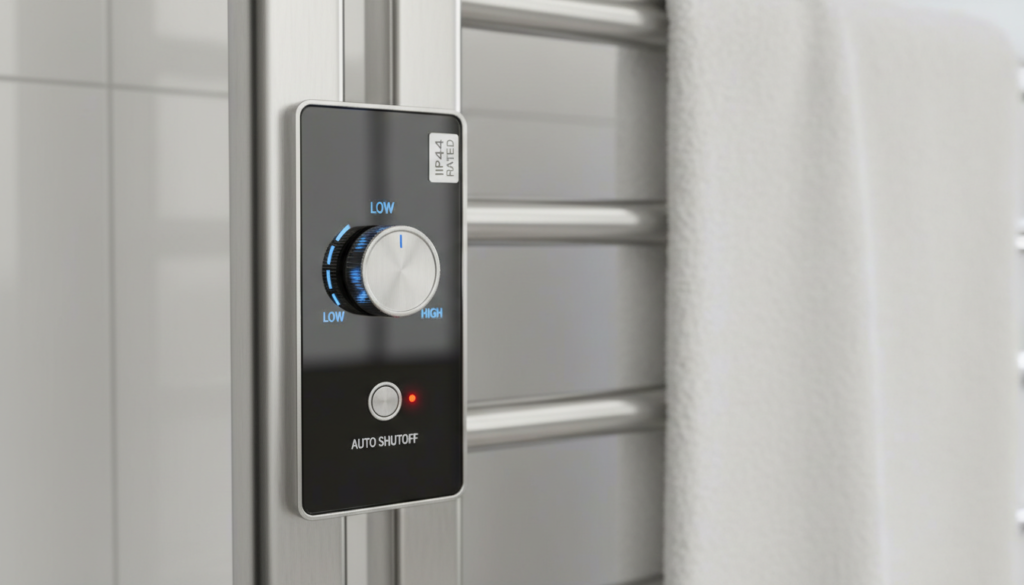
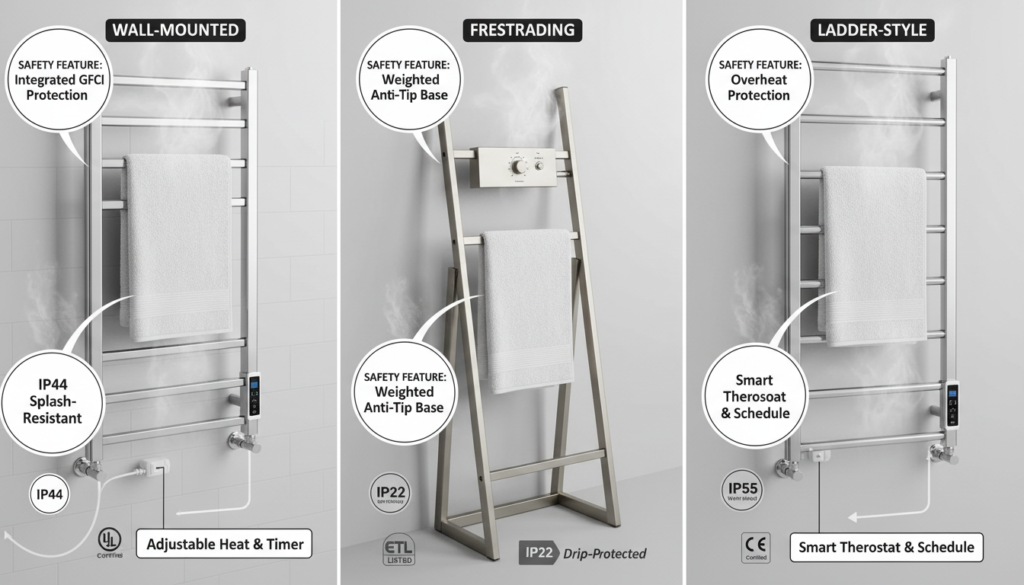
The IP (Ingress Protection) rating indicates how well a device resists water and dust. For bathroom use, look for heated towel racks with at least an IP44 rating, which ensures protection against water splashes from any direction.
Temperature Control
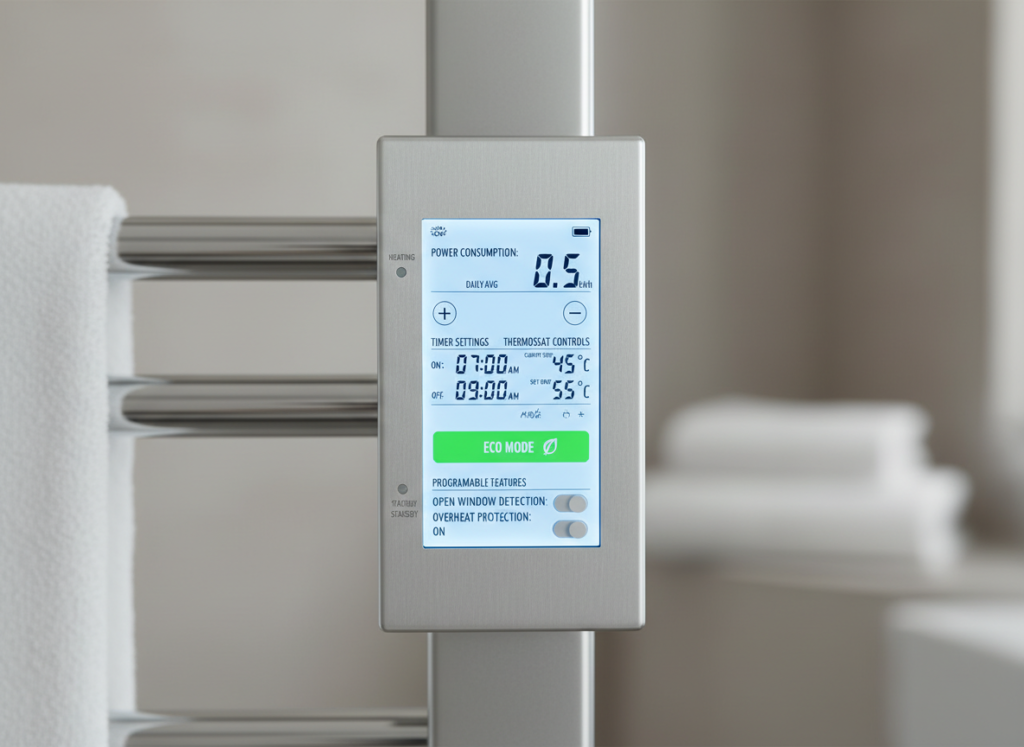
Quality towel warmers maintain a consistent, safe surface temperature, typically between 100-140°F (38-60°C). This is warm enough to heat towels but not hot enough to cause burns or fire hazards.
Automatic Shutoff
Many models include automatic shutoff features that power down the unit after a set time or if the temperature exceeds safe limits, preventing overheating even if you forget to turn it off.
Shop Safety-Certified Heated Towel Racks
Browse our collection of premium heated towel racks with advanced safety features, perfect for family bathrooms.
Installation Safety: Doing It Right
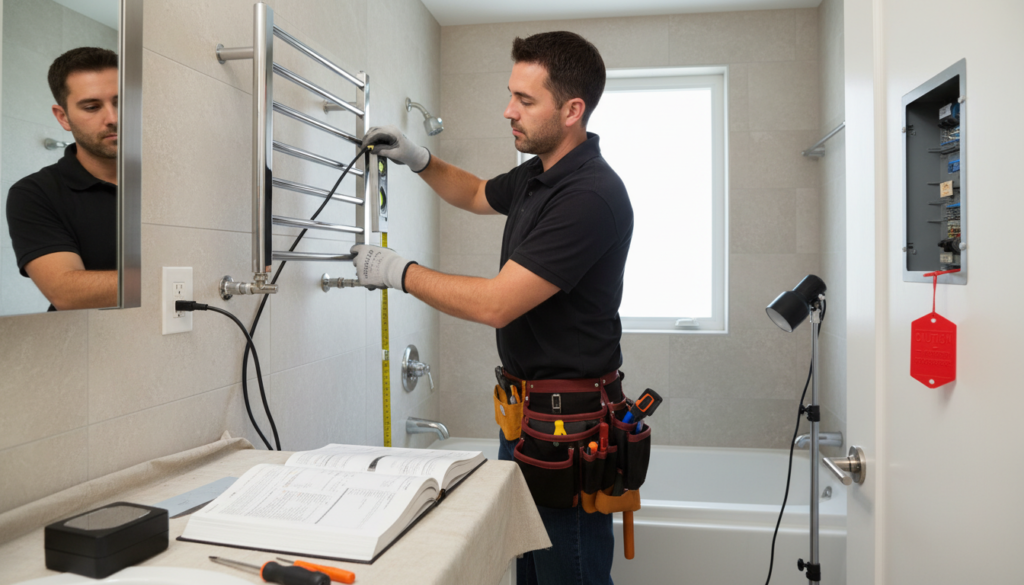
Proper installation is crucial for heated towel rack safety. While some models are designed for DIY installation, others require professional help.
Electric Towel Warmer Installation
Electric models come in two main installation types:
- Plug-in models: Simplest to install, just mount on the wall and plug into a nearby GFCI outlet
- Hardwired models: Require connection to your home’s electrical system, usually need professional installation by a licensed electrician
- Dual-connect models: Offer both options, starting as plug-in with the ability to convert to hardwired later
Hydronic Towel Warmer Installation
These models require integration with your plumbing system:
- Always require professional installation by a plumber
- Must be connected to your home’s hot water or hydronic heating system
- Need proper valves and connections to prevent leaks
- May require system modifications if retrofitting
Safety Warning: Always ensure electric heated towel racks are installed on circuits protected by Ground Fault Circuit Interrupters (GFCIs). These devices cut power when they detect electrical faults, preventing shock hazards in wet environments.
Understanding Bathroom Safety Zones
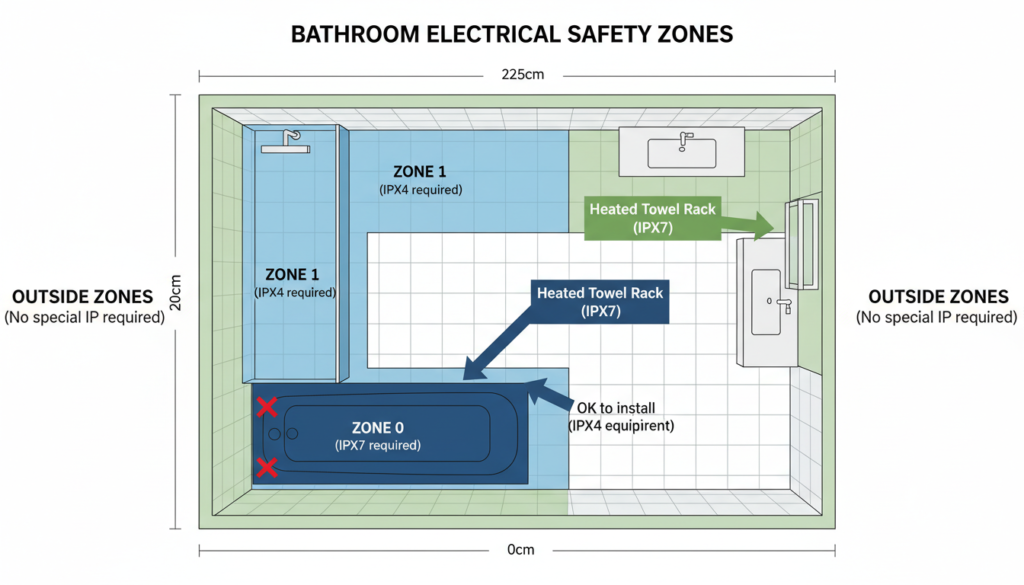
Bathrooms have specific safety zones that determine where electrical appliances can be installed. These zones help prevent water contact with electrical components.
Zone 0
Inside the bath or shower. No heated towel racks can be installed here regardless of IP rating.
Zone 1
The area directly above the bath or shower up to a height of 2.25m. Only low-voltage (12V) heated towel racks with an IP rating of at least IP67 can be installed here.
Zone 2
The area extending 0.6m beyond Zone 1 and to a height of 2.25m. Heated towel racks with a minimum IP rating of IP44 can be installed here.
Outside Zones
Areas beyond Zone 2. Standard heated towel racks with a minimum IP rating of IP44 can be installed here safely.
Daily Use Safety: Best Practices
Even with built-in safety features, proper use of your heated towel rack is important for maintaining safety. Follow these guidelines for safe daily operation:
Safe Use Guidelines
- Read and follow the manufacturer’s instructions
- Keep electrical connections away from water
- Use timers to prevent unnecessary operation
- Allow proper airflow around the unit
- Check for damage regularly
- Turn off when not in use for extended periods
What to Avoid
- Covering the entire unit with thick materials
- Placing wet clothes directly on electric models not rated for it
- Using extension cords with plug-in models
- Installing DIY if you lack electrical expertise
- Ignoring unusual noises, smells, or performance
Child and Pet Safety Considerations
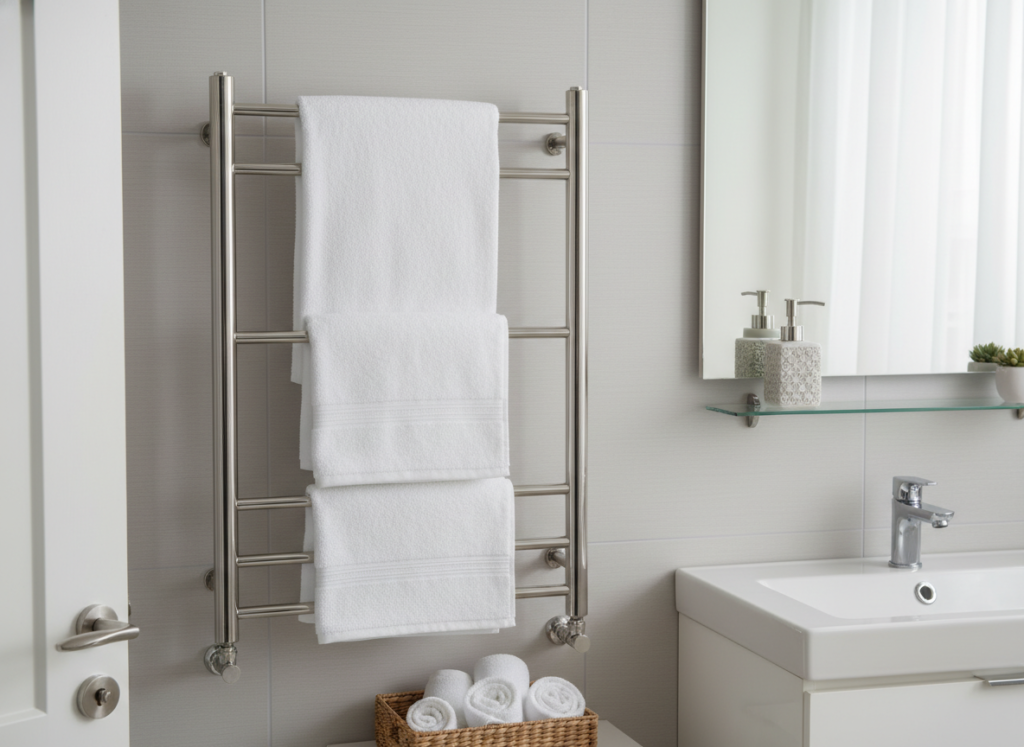
Households with children or pets need additional safety precautions when using heated towel racks. While modern units maintain safe surface temperatures, extra care helps prevent accidents.
Child Safety Tips
- Choose models with lower surface temperatures (under 120°F/49°C)
- Install towel warmers higher on walls, out of reach of small children
- Consider models with lockable temperature controls
- Use timer controls to limit operation to specific times
- Teach children about hot surfaces and proper use
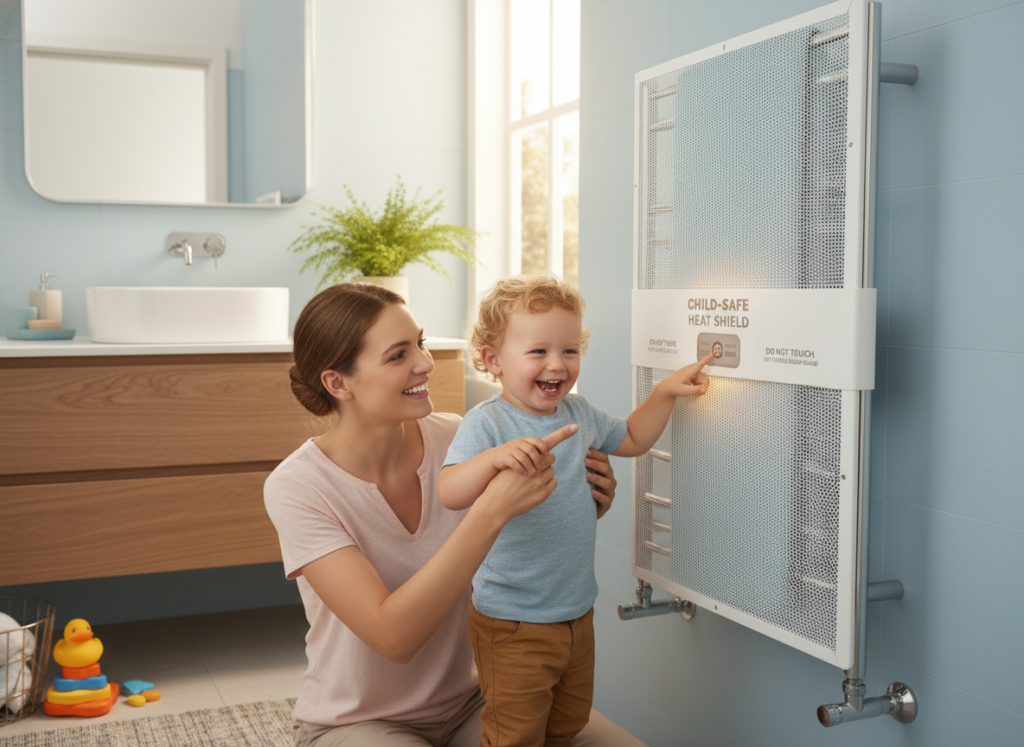
- Consider protective covers for extra safety
Pet Safety Tips
- Mount units where pets cannot climb or jump onto them
- Keep cords concealed or use hardwired models
- Monitor pets around newly installed units until they learn
- Consider hydronic models which often have more consistent temperatures
- Use programmable timers to run when pets are less active
Common Safety Questions About Heated Towel Racks
Can you put wet towels in a towel warmer?
Yes, you can safely put wet towels in most heated towel racks. In fact, many models are designed specifically to dry damp towels. The gentle heat helps evaporate moisture while warming the towel. However, check your specific model’s instructions, as some may recommend against extremely wet items.
Can a towel warmer dry towels completely?
Yes, a towel warmer can dry towels completely, though the time required varies based on the model’s wattage and the towel’s initial dampness. Most heated towel racks will dry a damp towel in 2-4 hours. For faster drying, choose models with higher wattage or ensure good air circulation around the towel.
Can you put clothes in a towel warmer?
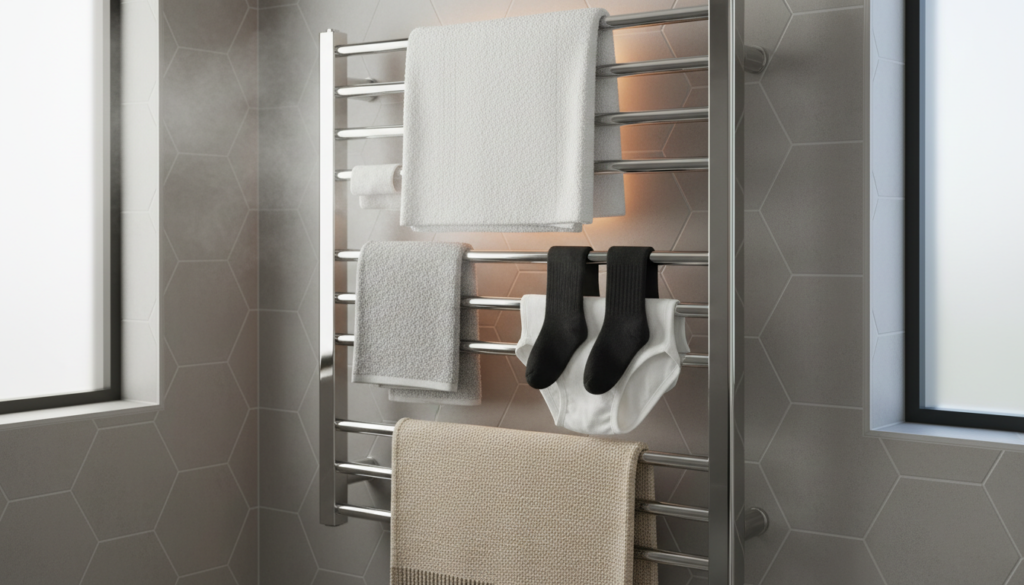
Yes, you can put clothes in most heated towel racks, but with some precautions. They work well for drying or warming lightweight items like socks, underwear, and t-shirts. Avoid heavy garments that might overload the rack. Always check the manufacturer’s guidelines, as some models have specific recommendations for clothing items.
Can you put a blanket in a towel warmer?
Small blankets and throws can be warmed on most heated towel racks, but avoid completely covering the unit with thick materials. This could cause overheating in some models. For best results, fold the blanket loosely over multiple rails to allow air circulation. Always follow your specific model’s weight and coverage guidelines.
Can heated towel racks catch fire?
When properly installed and used according to manufacturer instructions, heated towel racks have an extremely low fire risk. Modern units include safety features like thermal cutoffs that prevent overheating. To maintain safety, ensure your unit is certified to local safety standards, professionally installed if required, and never completely covered with thick materials.
Are heated towel racks expensive to run?
No, heated towel racks are surprisingly economical to operate. Most electric models use between 60-150 watts of power, similar to a standard light bulb. At average electricity rates, this costs approximately 1-3 cents per hour to run. Using timers or thermostats can further reduce operating costs by running the unit only when needed.
Energy Efficiency and Safety
Energy efficiency and safety go hand in hand with heated towel racks. More efficient models not only save money but often incorporate better safety features.
Energy-Saving Features
- Timers: Program operation only when needed
- Thermostats: Maintain optimal temperature without wasting energy
- Low wattage designs: Provide sufficient heat with minimal power consumption
- Insulated elements: Direct heat where needed without waste
Operating Costs
Based on average electricity costs of 16 cents per kWh:
- 100W model: ~1.6 cents per hour
- 150W model: ~2.4 cents per hour
- Daily cost (3 hours): 4.8-7.2 cents
- Monthly cost: $1.44-$2.16
How to Choose a Safe Heated Towel Rack
When shopping for a heated towel rack, prioritize these safety features to ensure you get a model that’s both effective and safe for your home.
| Safety Feature | Why It Matters | What to Look For |
| IP Rating | Protects against water intrusion | Minimum IP44 for bathrooms |
| Safety Certification | Ensures compliance with safety standards | UL, ETL, CSA, or CE certification |
| Temperature Control | Prevents overheating | Adjustable thermostat or fixed safe temperature |
| Auto Shutoff | Prevents extended operation | Timer function or thermal cutoff |
| Construction Quality | Ensures durability and safety | Stainless steel or quality materials |
| Warranty | Indicates manufacturer confidence | 2+ year warranty |
Find Your Perfect Heated Towel Rack
Browse our selection of safety-certified heated towel racks with advanced features like auto-shutoff, adjustable temperature, and proper IP ratings for bathroom use.
Conclusion: Are Heated Towel Racks Safe?
Yes, heated towel racks are safe when properly installed and used according to manufacturer guidelines. Modern units include multiple safety features that make them suitable for bathroom environments. By choosing a quality model with appropriate safety certifications, following installation requirements, and practicing safe usage habits, you can enjoy the luxury and convenience of warm towels without safety concerns.
Remember that safety comes from both the product design and how you use it. Choose models with proper IP ratings for bathrooms, ensure correct installation (professional if required), and follow the usage guidelines we’ve outlined. With these precautions, a heated towel rack makes a safe, energy-efficient, and luxurious addition to your bathroom.