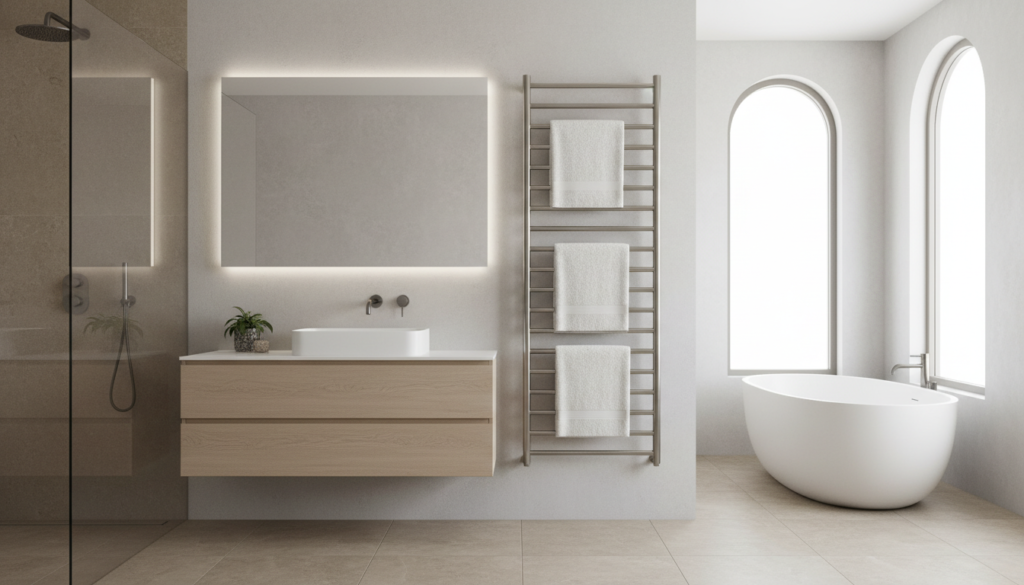

Quick Answer: Typical Power Consumption of Heated Towel Rails
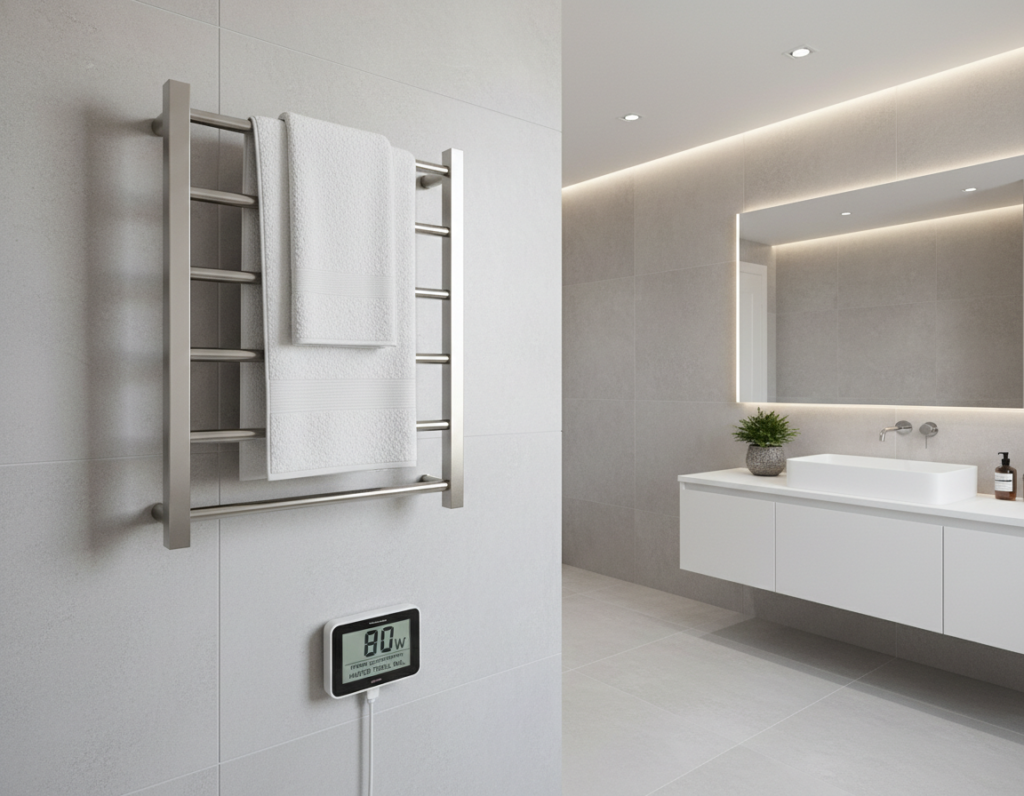
Most heated towel rails consume between 20 and 250 watts of power per hour, with the average model using about 60 to 100 watts. This is roughly equivalent to a standard light bulb and much less than many other household appliances.
| Towel Rail Type | Typical Wattage Range | Average Daily Cost (6 hrs use) | Monthly Cost Estimate |
| Small Electric Models | 20-40W | $0.03-$0.06 | $0.90-$1.80 |
| Medium Electric Models | 40-100W | $0.06-$0.15 | $1.80-$4.50 |
| Large Electric Models | 100-250W | $0.15-$0.38 | $4.50-$11.40 |
| Hydronic Models | Varies with heating system | $0.05-$0.20 | $1.50-$6.00 |
For comparison, a tumble dryer uses about 3,000 watts per hour, making a heated towel rail a much more energy-efficient option for keeping your towels dry and warm.

How to Calculate the Running Cost of Your Heated Towel Rail
To work out how much your heated towel rail costs to run, you need to know its wattage and your electricity rate. Here’s a simple formula:
Daily Cost = (Wattage ÷ 1000) × Hours Used × Electricity Rate
For example, if you have a 90-watt towel rail that runs for 6 hours per day, and your electricity costs $0.25 per kWh:
(90W ÷ 1000) × 6 hours × $0.25 = $0.135 per day
That’s about $4.05 per month or $16.20 per quarter.
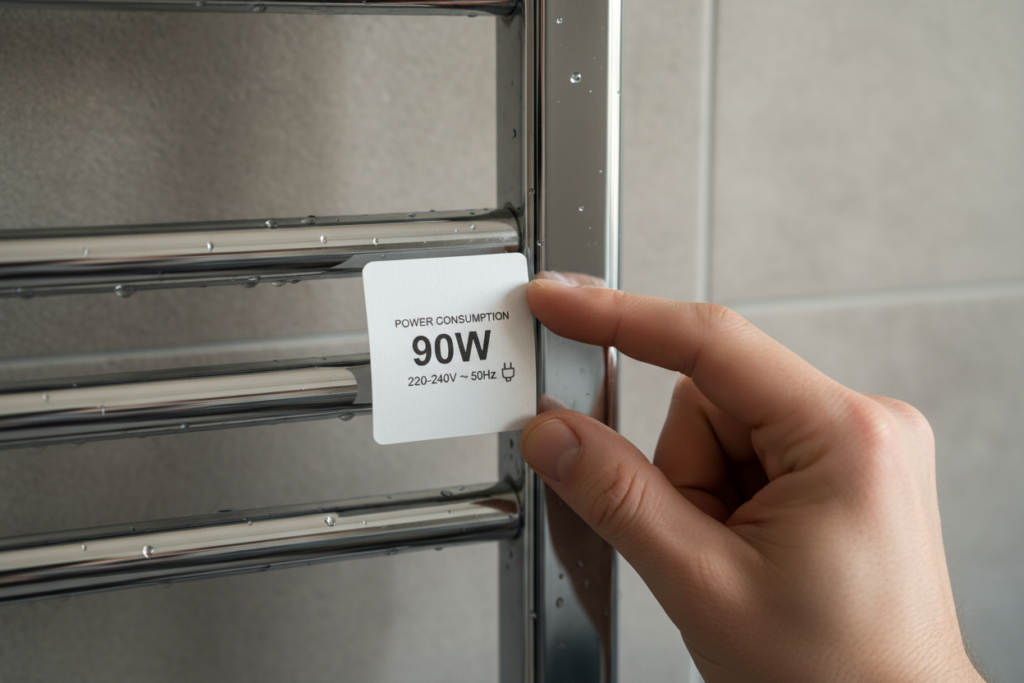
Most heated towel rails come with a label or manual that states their wattage. If you can’t find this information, check the manufacturer’s website or contact their customer service.
Different Types of Heated Towel Rails and Their Energy Usage
The type of heated towel rail you choose affects how much power it uses and how efficiently it operates.
Electric Heated Towel Rails
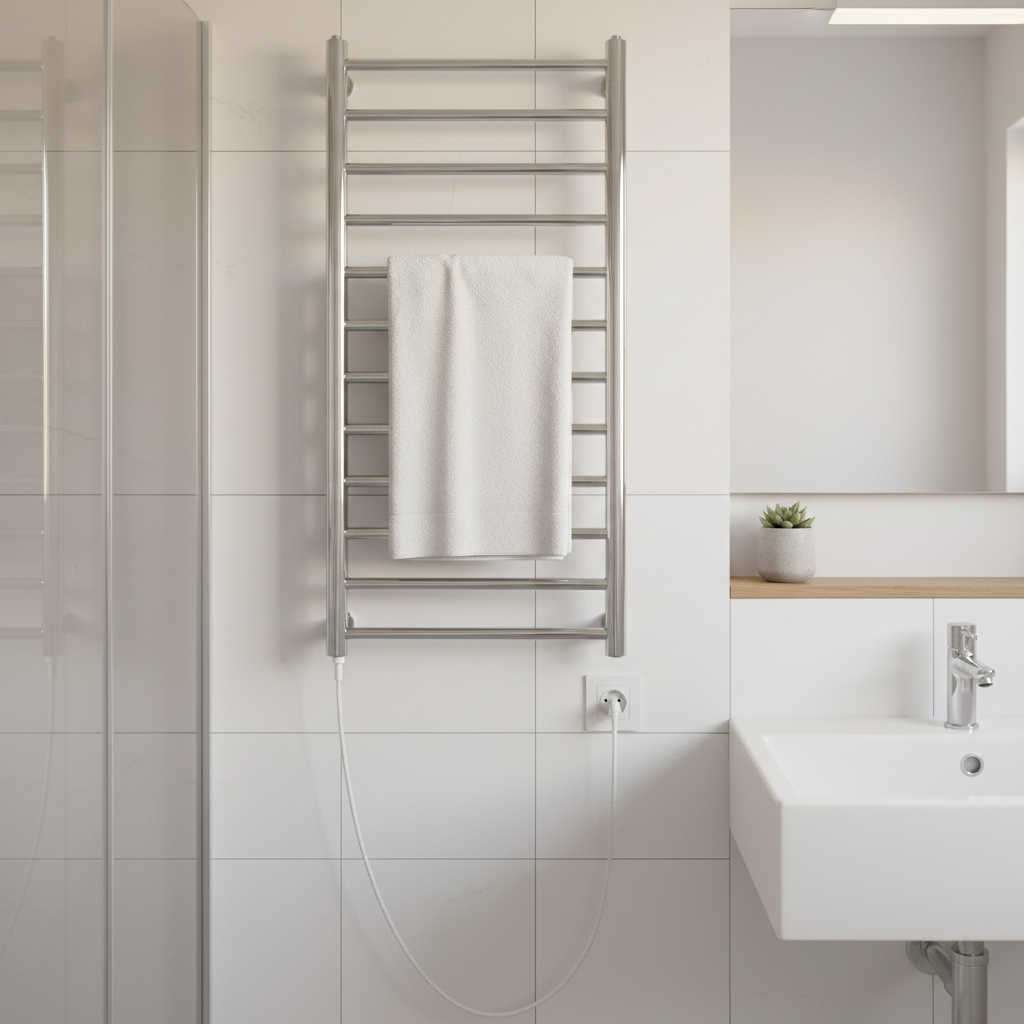
These plug directly into an electrical outlet. They’re easy to install and work independently from your home’s heating system. They typically use between 20-250 watts depending on size and design.
Best for: Quick installation, independent operation
Hardwired Heated Towel Rails
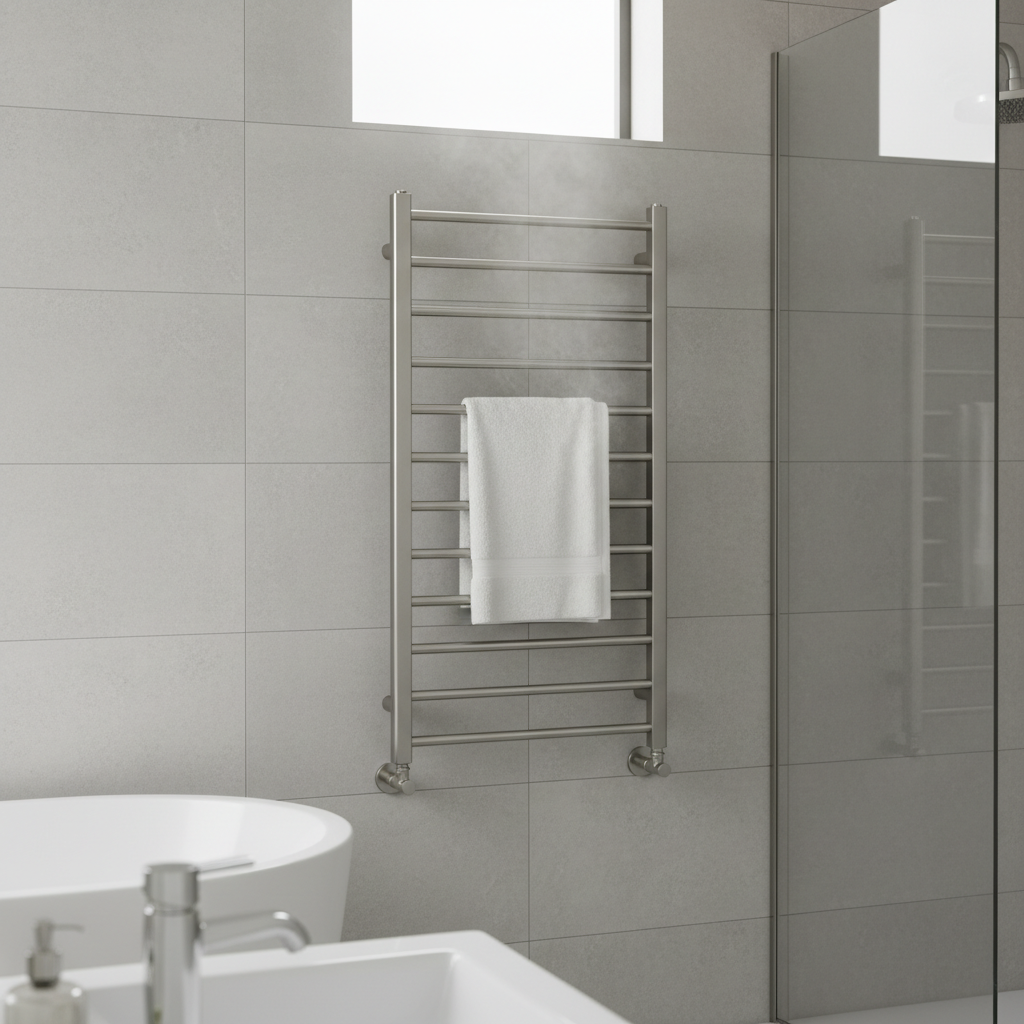
Connected directly to your home’s electrical system, these models offer a cleaner look with no visible cords. They use similar wattage to plug-in models but require professional installation.
Best for: Clean aesthetic, permanent installation
Hydronic Heated Towel Rails
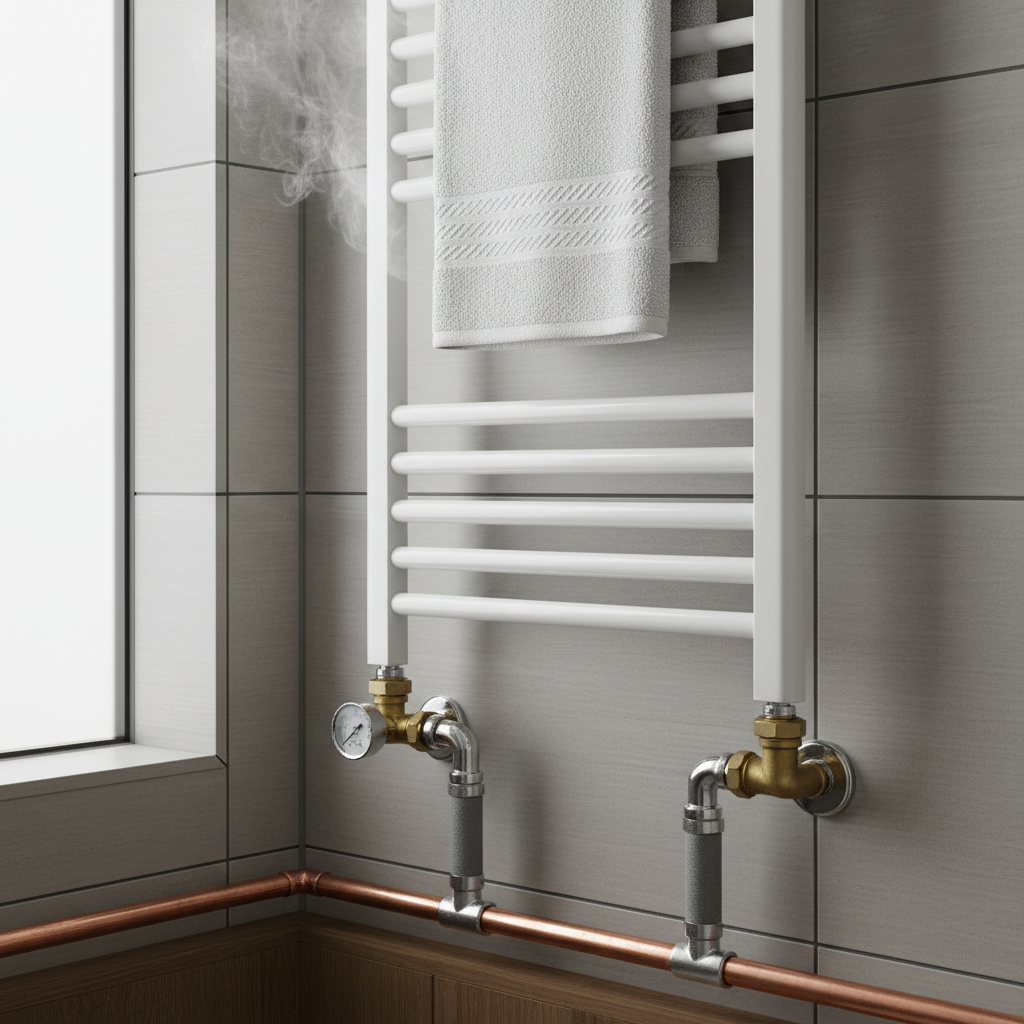
These connect to your home’s central heating system and use hot water to warm the rail. They’re often more energy-efficient if you already use your central heating regularly.
Best for: Energy efficiency with existing heating systems
Energy Efficiency Tip: Dual-fuel towel rails can switch between your central heating system and electricity, giving you flexibility to use the most efficient energy source depending on the season.
4 Key Factors That Affect Towel Rail Energy Consumption
Several factors determine how much electricity your heated towel rail will use. Understanding these can help you make smarter choices about which model to buy and how to use it.
1. Size and Design
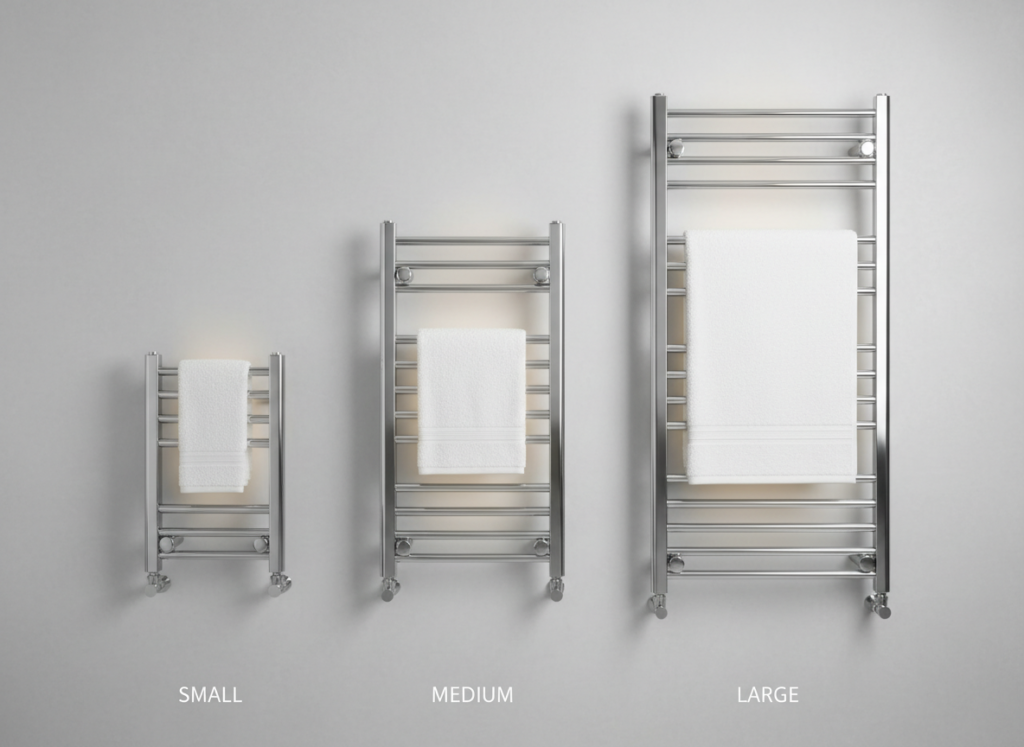
Larger towel rails with more bars require more energy to heat. However, they also dry more towels at once, which might be more efficient than running a smaller rail for longer periods.
2. Material and Heat Conductivity
The material of your towel rail affects how quickly it heats up and how well it retains heat. Stainless steel and aluminum models tend to heat up faster and distribute heat more evenly than other materials.
3. Smart Features and Controls
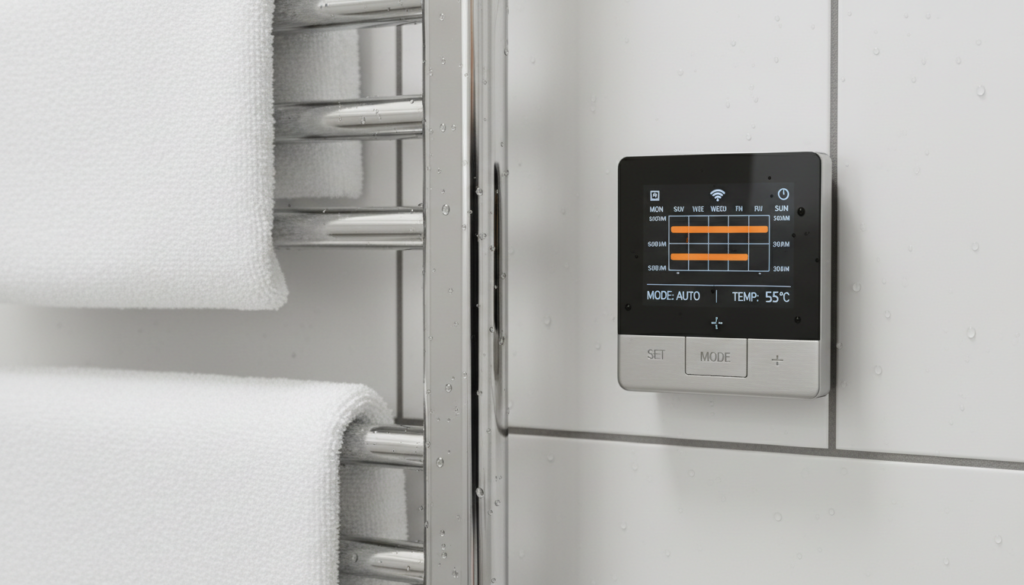
Modern heated towel rails often come with energy-saving features like timers, thermostats, and Wi-Fi controls. These can significantly reduce power consumption by ensuring the rail only runs when needed.
4. Usage Patterns
How you use your towel rail has a major impact on energy consumption. Running it for a few hours before and after showers is more efficient than leaving it on all day.
Most people overestimate how long they need to run their heated towel rail. For most households, 3-4 hours per day is enough to keep towels dry and prevent bacteria growth.
5 Ways to Reduce Your Heated Towel Rail’s Energy Consumption
You can enjoy the luxury of warm, dry towels without wasting energy. Here are some practical tips to keep your electricity bills down.
- Use a timer or smart plug – Set your towel rail to run only when needed, such as an hour before your morning shower and for a few hours afterward.
- Choose the right wattage – For most bathrooms, a 50-100W towel rail provides sufficient heat without excessive energy use.
- Install a thermostat – This prevents the rail from overheating and wasting energy once it reaches the optimal temperature.
- Position towels correctly – Hang towels so they cover as much of the rail as possible for maximum heat transfer and faster drying.
- Consider a dual-fuel option – These can use your central heating in winter and electricity in summer, potentially saving energy.
Looking for an Energy-Efficient Heated Towel Rail?
Modern heated towel rails with smart controls can reduce energy consumption by up to 60% compared to older models. Explore energy-efficient options that keep your towels warm without the high electricity bills.
Common Myths About Heated Towel Rail Power Consumption
There are several misconceptions about how much power heated towel rails use. Let’s separate fact from fiction.
Myth: Heated towel rails are expensive to run
Fact: Most heated towel rails use between 20-250 watts, similar to a few light bulbs. Running a 100W towel rail for 6 hours daily costs about $4.50 per month at average electricity rates.
Myth: You should leave heated towel rails on 24/7
Fact: Running your towel rail continuously wastes energy. Most towels dry completely within 3-4 hours. Using timers to run the rail only when needed can cut energy use by up to 70%.
Myth: Heated towel rails can’t heat your bathroom
Fact: While primarily designed for drying towels, heated rails do contribute some warmth to your bathroom. However, they’re not efficient as primary heaters due to their limited wattage.
Myth: Higher wattage always means better performance
Fact: The best wattage depends on your bathroom size and needs. For most home bathrooms, a 50-100W rail provides sufficient heat for drying towels without excessive energy use.
How Heated Towel Rails Compare to Other Drying Methods
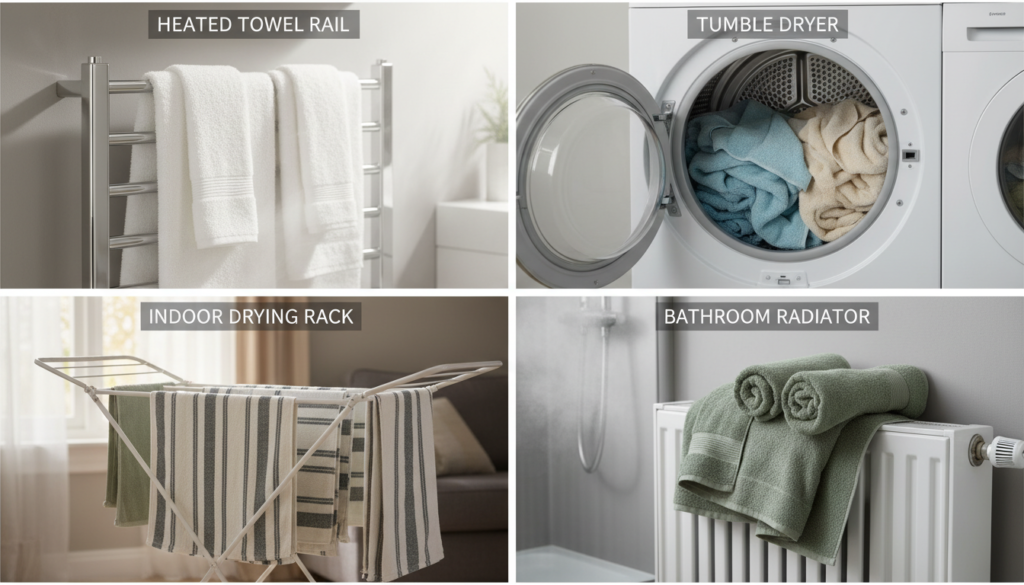
When considering energy efficiency, it’s worth comparing heated towel rails to other ways of drying towels.
| Drying Method | Typical Power Use | Drying Time | Cost Per Use | Pros | Cons |
| Heated Towel Rail | 20-250W | 2-4 hours | $0.03-$0.15 | Warm towels, prevents mildew, space-saving | Initial purchase cost |
| Tumble Dryer | 2,000-3,000W | 30-60 minutes | $0.25-$0.75 | Quick drying, handles multiple towels | High energy use, fabric wear |
| Air Drying (Indoor) | 0W | 8-24 hours | $0 | Free, no energy use | Slow, potential mildew, stiff towels |
| Bathroom Radiator | Varies with heating | 4-8 hours | Varies | Uses existing heating | Reduces heating efficiency, limited space |
While heated towel rails aren’t the fastest drying method, they offer a good balance of energy efficiency, convenience, and additional benefits like warm towels and reduced bathroom humidity.
Recommended Energy-Efficient Heated Towel Rails
If you’re looking for a heated towel rail that balances performance with low power consumption, here are some options worth considering.
Best Budget Option
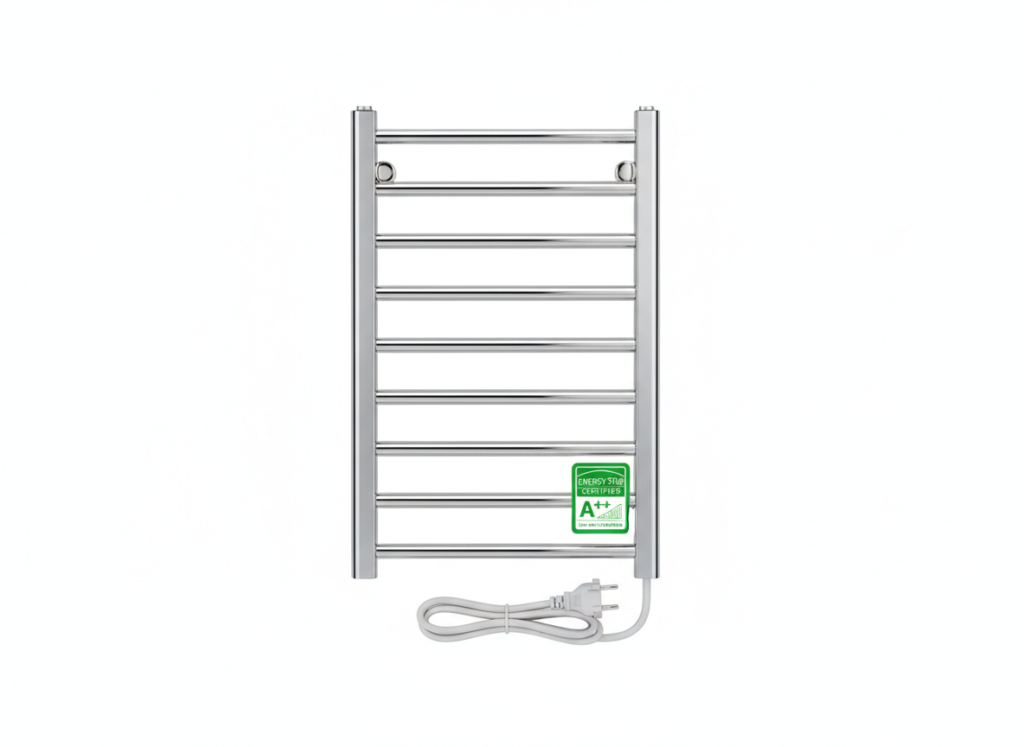
Power Rating: 30W
Est. Running Cost: $2.70/quarter (6hrs daily)
Perfect for small bathrooms, this compact model uses minimal power while still effectively drying towels. Includes a basic timer for energy management.
Best Smart Features
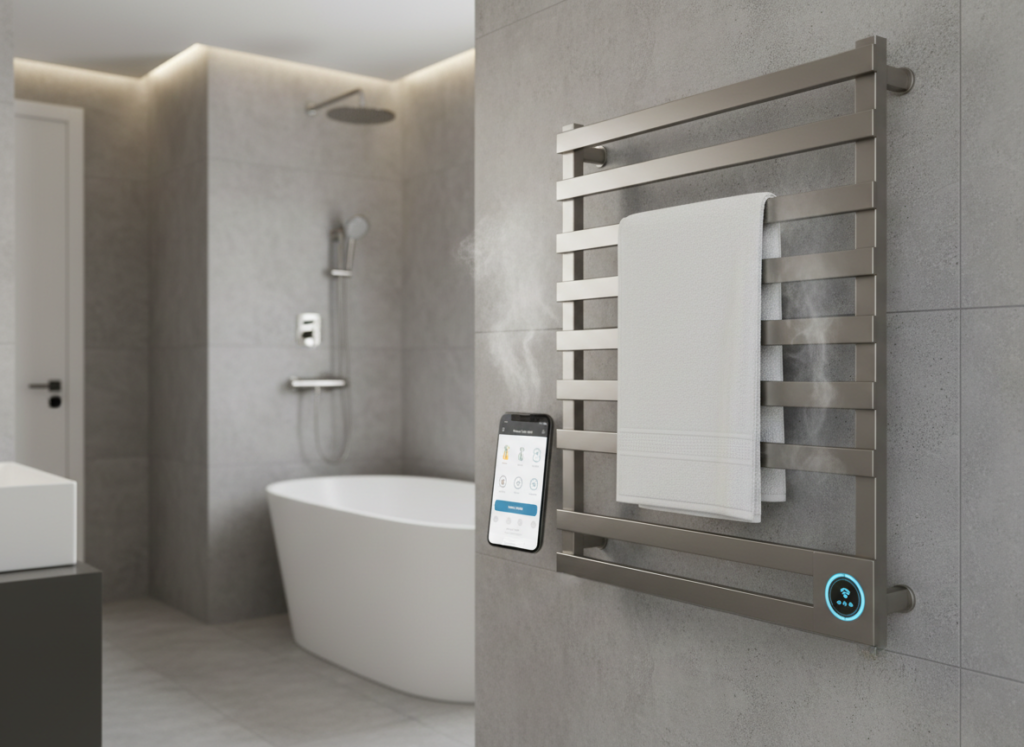
Power Rating: 80W
Est. Running Cost: $7.20/quarter (6hrs daily)
This mid-range model features WiFi connectivity, allowing you to control it remotely and set custom schedules. Its smart thermostat adjusts power use based on bathroom humidity and temperature.
Best for Large Bathrooms
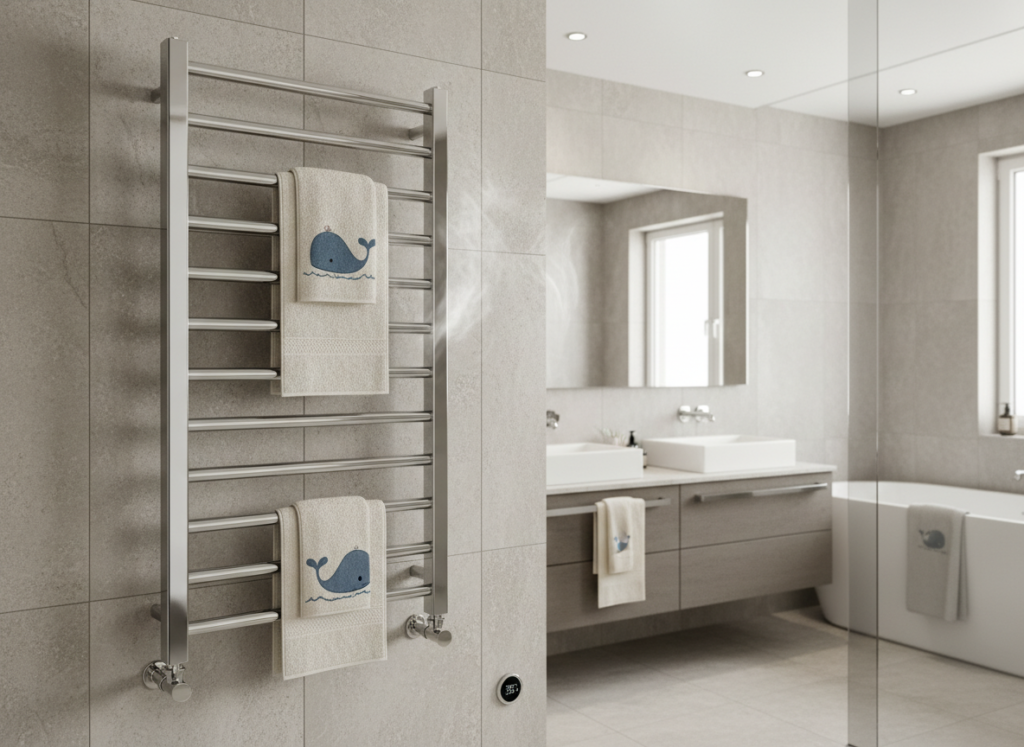
Power Rating: 150W
Est. Running Cost: $13.50/quarter (6hrs daily)
Despite its higher wattage, this model includes zone heating technology that focuses heat where needed, making it more efficient than other large rails. Perfect for family bathrooms with multiple towels.
Find Your Perfect Energy-Efficient Heated Towel Rail
Compare the latest models with energy-saving features that can reduce your running costs while keeping your towels warm and dry.
Final Thoughts: Are Heated Towel Rails Worth the Power They Use?
Heated towel rails use surprisingly little power compared to many other bathroom appliances. With most models consuming between 20-250 watts per hour, they’re comparable to running a few light bulbs. For the average household, this translates to just $4-$16 per quarter when used for 6 hours daily.
The benefits extend beyond just warm towels. These devices help prevent mildew growth, reduce bathroom humidity, and can even contribute some heat to your bathroom space. When you consider these advantages alongside their modest energy consumption, heated towel rails offer good value for most households.
By choosing an energy-efficient model and using smart controls like timers and thermostats, you can further reduce power consumption while still enjoying all the benefits. The key is selecting the right size and type for your specific bathroom needs and using it thoughtfully rather than leaving it running continuously.
A heated towel rail isn’t just a luxury—it’s a practical bathroom addition that uses minimal power while providing multiple benefits for comfort, hygiene, and bathroom maintenance.