


We’ll cover different types of towel warmers, proper towel placement, energy-saving tips, and common mistakes to avoid. By the end, you’ll know exactly how to use your towel warmer for maximum comfort and efficiency.
What Are Towel Warmers and How Do They Work?
Towel warmers are bathroom fixtures designed to heat and dry your towels. They work through different heating methods, keeping your towels warm, dry, and fresh between uses. Beyond comfort, they help prevent mildew and bacteria growth that thrive in damp towels.
Types of Towel Warmers
Electric Towel Warmers
The most common type, electric towel warmers heat up through internal wiring. They come in two main styles:
- Wall-mounted models that save space and add a modern look
- Freestanding units that can move around and need no installation
Electric models plug into standard outlets or can be hardwired into your bathroom’s electrical system. They heat up in about 15-30 minutes and use about as much electricity as a light bulb.
Hydronic Towel Warmers
These connect to your home’s hot water system. While they cost more to install, they provide even, energy-efficient heat across all bars.
Hydronic systems work by circulating hot water through the towel warmer bars. They take longer to heat up but maintain consistent warmth and can be more energy-efficient in the long run.
Benefits of Using a Towel Warmer
Advantages
- Warm, cozy towels after every shower
- Faster drying prevents mildew and bacteria
- Adds warmth to small bathrooms
- Reduces laundry frequency
- Adds a touch of luxury to your bathroom
Considerations
- Uses electricity (though typically minimal)
- Requires proper installation
- Takes up wall or floor space
- Initial cost investment
How to Use a Towel Warmer: Basic Operation
Using a towel warmer properly ensures you get warm, dry towels while maximizing energy efficiency. Follow these simple steps for the best results:
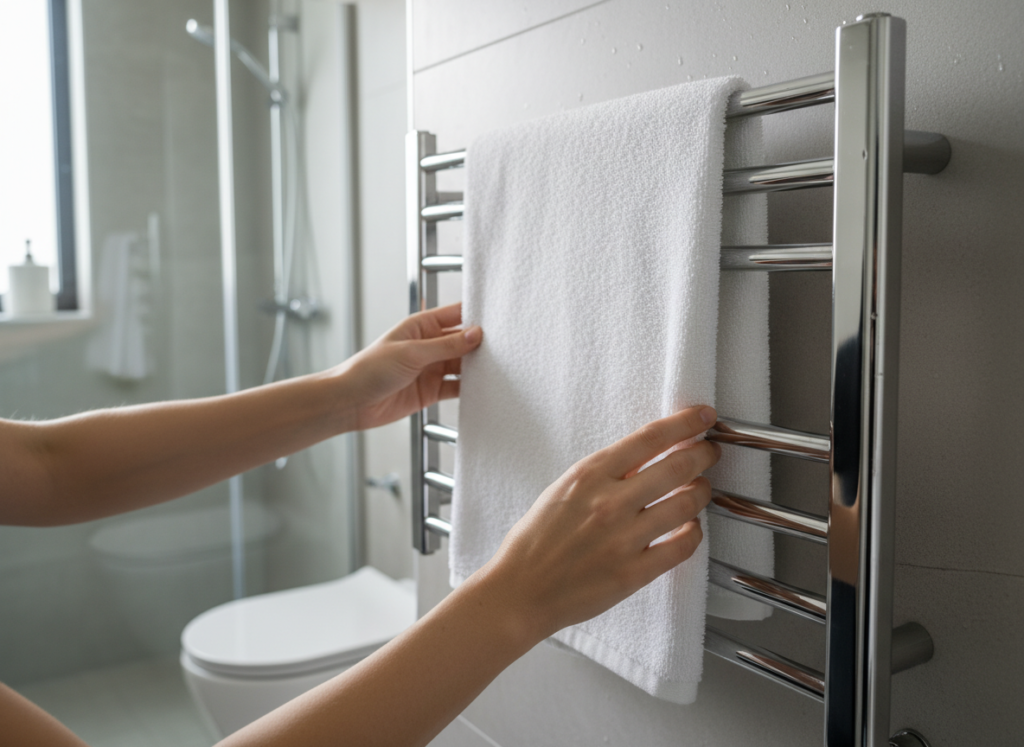
Step 1: Check Safety Before Starting
Before using your towel warmer, always check the power cord for damage and ensure the unit is securely mounted. Never use a towel warmer with broken switches or loose wires. Most towel warmers operate safely at temperatures between 104°F and 122°F.
For electric models, make sure the outlet is GFCI-protected, especially in bathrooms where water is present. Keep the unit away from water sources and never touch it with wet hands.
Step 2: Place Towels Properly for Even Heating
How you place towels on your heated rack makes a big difference in drying efficiency:
- Fold your towel lengthwise twice to create four layers
- Hang each towel over a single bar (not across multiple bars)
- Space towels evenly to allow air circulation
- Avoid overcrowding the rack with too many towels
This method, sometimes called “Direct Intelligent Heating,” maximizes contact between the towel and the heated bar. It helps towels dry faster and heat more evenly than weaving them through multiple bars.
Step 3: Turn On Your Towel Warmer
Different towel warmers have different controls:
- On/Off Switch: Simply flip the switch to turn on the unit
- Plug-in Models: Plug into an outlet and use the built-in switch
- Hardwired Models: Use the wall switch or timer control
- Smart Controls: Some models offer app control or programmable timers
Most towel warmers need 15-30 minutes to reach full temperature. You can place towels on the rack before or after turning it on.
Step 4: Set Timers for Energy Efficiency
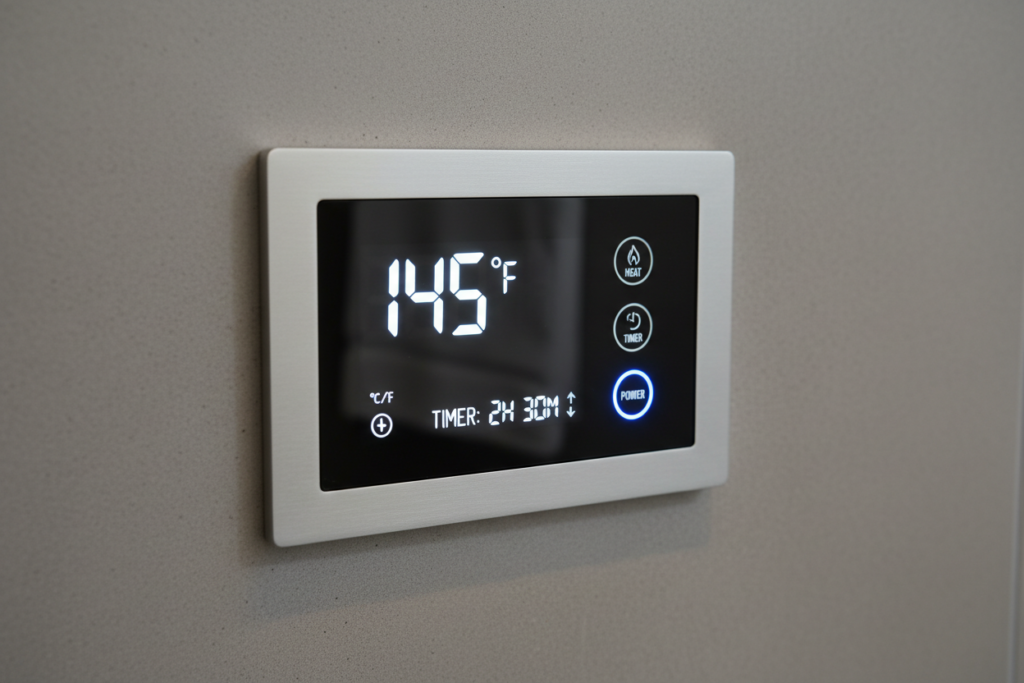
To save energy, use the timer function if your model has one:
- Program the warmer to turn on 30 minutes before your shower
- Set it to run for 1-2 hours total (enough to dry towels)
- Consider programmable timers that learn your routine
- For manual models, remember to turn them off after use
A towel typically needs about 20-30 minutes on the warmer to feel toasty. For drying damp towels completely, allow 1-2 hours depending on thickness.
Looking for an Energy-Efficient Towel Warmer?
Upgrade your bathroom with a premium heated towel rack that includes timer controls and energy-saving features.
Advanced Tips for Using Your Heated Towel Rack
Temperature Control Settings
Many modern towel warmers come with adjustable temperature settings. For optimal use:
- Winter months: Use higher settings (110-120°F) for extra warmth
- Summer months: Lower settings (90-100°F) are sufficient for drying
- Always use the lowest comfortable setting to save energy
- Some models have eco-modes that reduce power consumption
The ideal temperature balances comfort with energy efficiency. Remember that the main purpose is to dry towels, not just warm them.
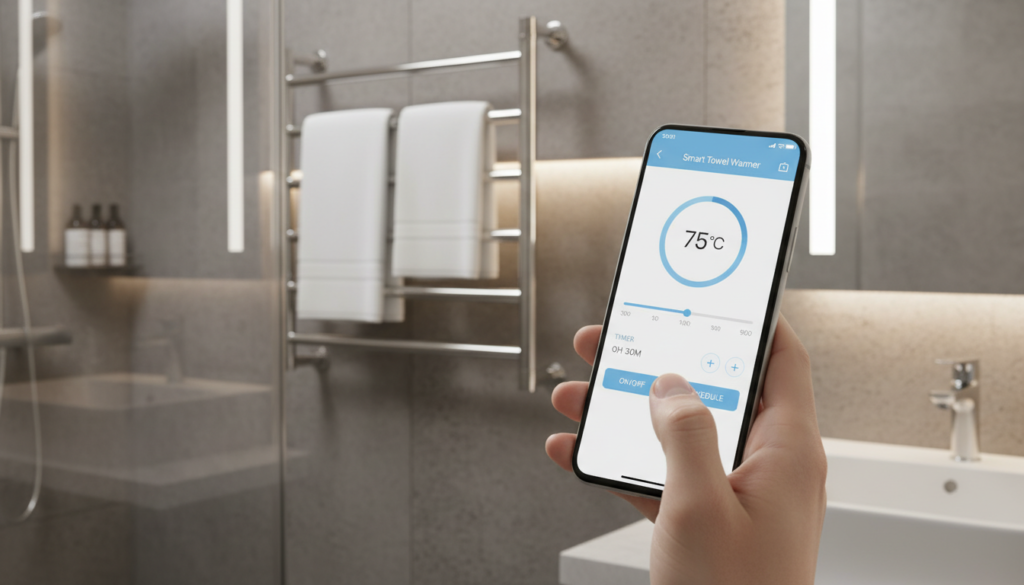
Using Smart Controls and Remote Access
Wi-Fi enabled towel warmers offer convenient control options:
- Control your towel warmer from anywhere using a smartphone app
- Set schedules that match your daily routine
- Receive notifications when towels should be warm
- Track energy usage to optimize efficiency
- Integrate with smart home systems like Alexa or Google Home
These smart features help you save energy while ensuring your towels are warm exactly when you need them.
What Can You Warm Besides Towels?
Towel warmers can safely warm several items beyond just bath towels:
Safe to Warm
- Bathrobes and dressing gowns
- Small blankets or throws
- Swimwear (to dry, not heat)
- Delicate clothing items
- Baby blankets (check temperature first)
Never Place on Towel Warmer
- Plastic items (can melt)
- Rubber materials
- Shoes or boots
- Electronics or anything with batteries
- Items with metal parts or zippers
Always check the manufacturer’s guidelines about what items are safe to place on your specific model.
Towel Warmer Installation: Plug-in vs. Hardwired
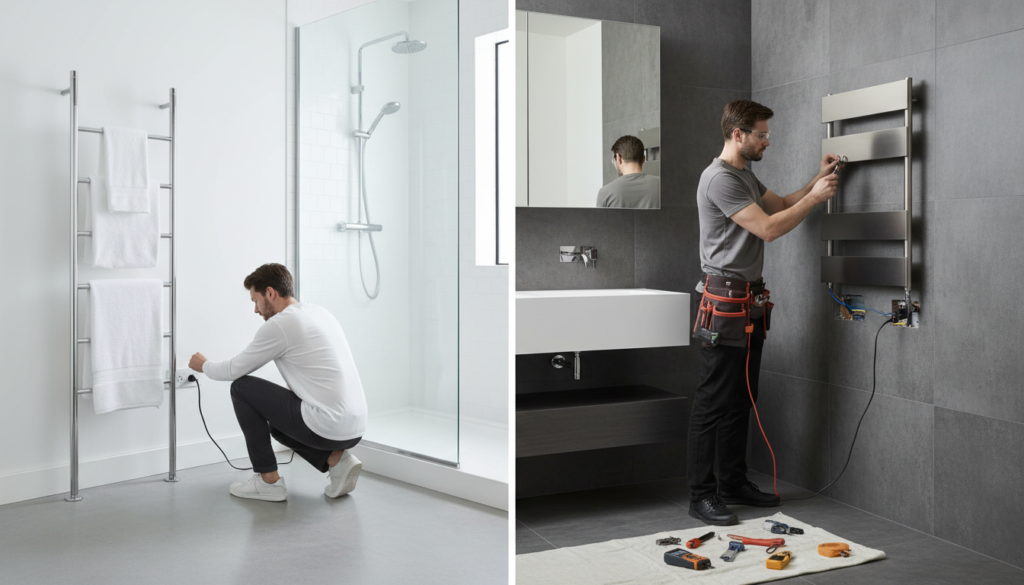
Before you can use a towel warmer, you need to install it properly. The two main installation types each have their own advantages:
| Feature | Plug-in Towel Warmers | Hardwired Towel Warmers |
| Installation Difficulty | Easy – just mount and plug in | Requires professional electrician |
| Appearance | Visible cord | Clean look, no visible cords |
| Flexibility | Can be moved if needed | Permanently installed |
| Control Options | Usually on-unit controls | Wall switches, timers, smart controls |
| Cost | Lower initial cost | Higher due to installation |
How to Install a Plug-in Towel Warmer
- Choose a location near an electrical outlet
- Mark mounting holes using the template provided
- Drill holes and insert wall anchors
- Attach mounting brackets to the wall
- Hang the towel warmer on the brackets
- Plug into a GFCI-protected outlet
Always follow the specific mounting instructions included with your model. Most wall-mounted units need to be installed at least 24 inches above the floor.
Hardwired Installation Basics
For hardwired models, you’ll need a licensed electrician to:
- Install proper electrical wiring to the location
- Mount the towel warmer securely to the wall
- Connect the unit to your home’s electrical system
- Install any wall-mounted controls or timers
- Test the system for proper operation
Hardwired installation provides a cleaner look and often more control options, but requires professional help to ensure safety and code compliance.
Need a Simple Solution?
Try our easy-to-install plug-in towel warmers – no electrician needed. Get warm towels with minimal setup.
Maintaining Your Towel Warmer for Longevity
Proper maintenance keeps your towel warmer working efficiently for years. Follow these simple care steps:
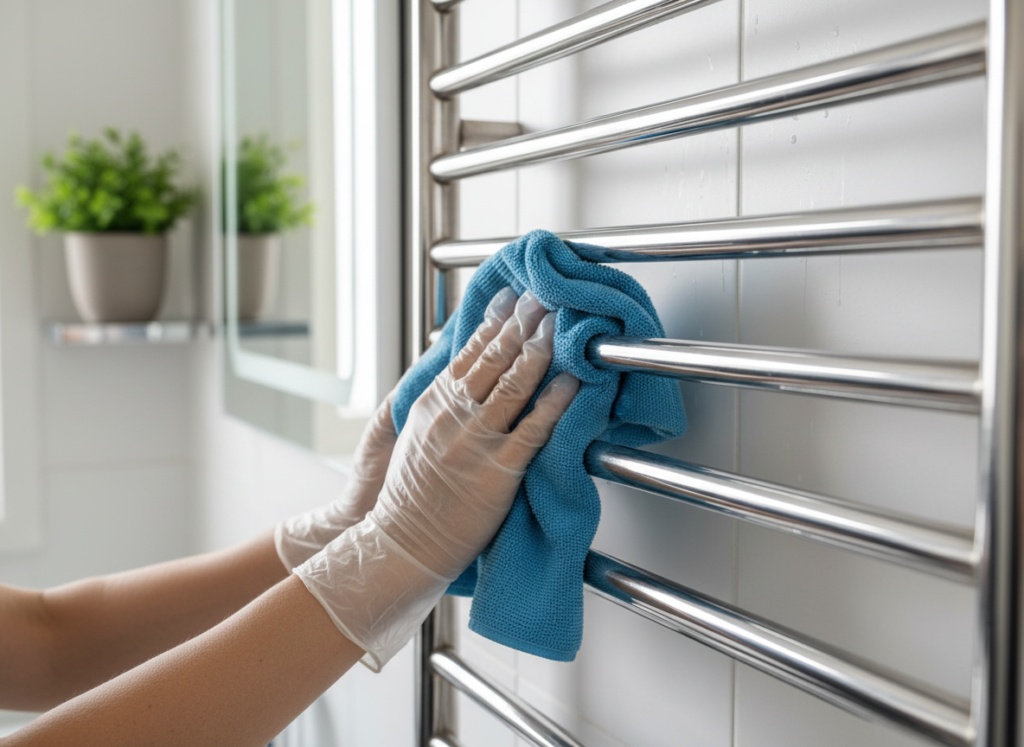
Regular Cleaning
Keep your towel warmer looking and working its best with regular cleaning:
- Turn off and unplug the unit (or switch off at the breaker for hardwired models)
- Let it cool completely before cleaning
- Wipe down with a soft, damp cloth to remove dust and moisture
- For stainless steel models, buff with a dry cloth after cleaning
- Clean weekly to prevent buildup of dust or bathroom products
Important: Never use harsh chemicals, abrasive cleaners, or chlorine-based products on your towel warmer. These can damage the finish and reduce the lifespan of your unit.
Troubleshooting Common Issues
If your towel warmer isn’t working properly, check these common issues:
- Not heating: Check power connection, reset breaker, or verify outlet works
- Heating unevenly: Could indicate internal damage, contact manufacturer
- Strange noises: Turn off immediately and consult professional help
- Timer not working: Check settings or replace timer if defective
- Leaking (hydronic models): Turn off and call a plumber immediately
Always consult your owner’s manual for model-specific troubleshooting steps. For persistent issues, contact the manufacturer or a qualified repair professional.
Energy Efficiency Tips for Towel Warmers
Towel warmers don’t have to be energy hogs. With smart usage, you can enjoy warm towels without high electricity bills.
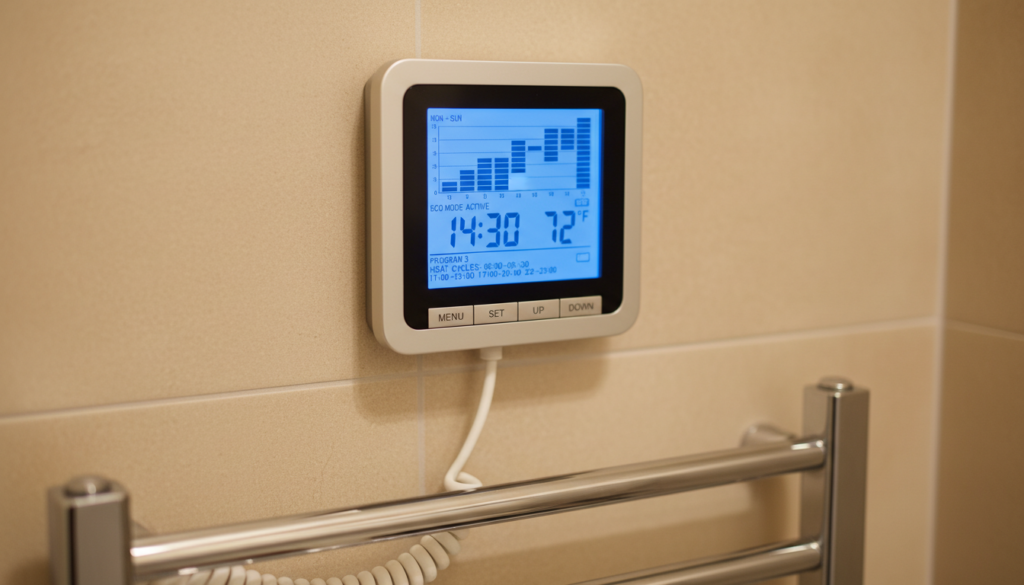
How Much Energy Do Towel Warmers Use?
Most electric towel warmers use between 40-200 watts of power, similar to a few light bulbs. The actual cost depends on:
- Wattage of your specific model
- Hours of daily operation
- Your local electricity rates
- Whether you use timers or manual control
To estimate your cost, use this formula: (Wattage × Hours Used × Days) ÷ 1000 × Electricity Rate = Monthly Cost
For example, a 100-watt towel warmer used 2 hours daily with electricity at $0.12/kWh would cost about $0.72 per month.
Smart Usage Strategies
Maximize efficiency with these energy-saving techniques:
Timer Strategies
- Set timers to run only before and after showers
- Program for 30 minutes before use and 1 hour after
- Use 7-day programmable timers to match your schedule
- Consider smart plugs for basic models without built-in timers
Placement Optimization
- Install in locations that maximize air circulation
- Keep away from drafts that steal heat
- Position near shower for convenience
- Consider insulation behind hardwired models
The most efficient approach combines a quality towel warmer with smart controls and proper usage habits.
“The best energy-saving feature is the one you actually use. A simple timer can reduce towel warmer energy consumption by up to 60% compared to leaving it running continuously.
Safety Guidelines for Using Towel Warmers
Towel warmers are generally safe when used properly, but following these guidelines ensures both safety and optimal performance.
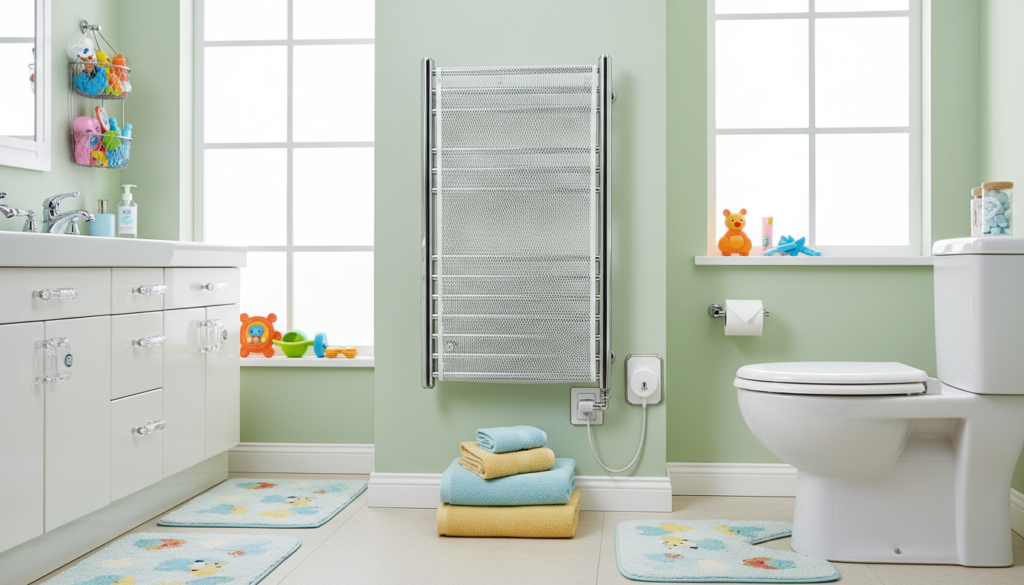
Essential Safety Rules
- Never cover the entire towel warmer with multiple items
- Keep electrical connections away from water
- Use GFCI-protected outlets for plug-in models
- Follow manufacturer’s guidelines for maximum weight capacity
- Turn off when not in use or when leaving home for extended periods
- Keep flammable materials away from the unit
Child Safety Considerations
If you have children in your home:
- Choose models with lower surface temperatures
- Consider towel warmers with protective covers
- Install wall-mounted units higher on the wall
- Use timers to ensure the unit isn’t left on unnecessarily
- Teach children that the towel warmer is not a toy
Some manufacturers offer specific child-safe models with cooler external surfaces while still effectively warming towels.
Warning: Never place wet swimwear or clothing containing elastic directly on high-temperature towel warmers. The heat can damage elastic fibers and some synthetic materials.
Choosing the Right Towel Warmer for Your Needs
With so many options available, finding the perfect towel warmer depends on your specific needs and bathroom setup.
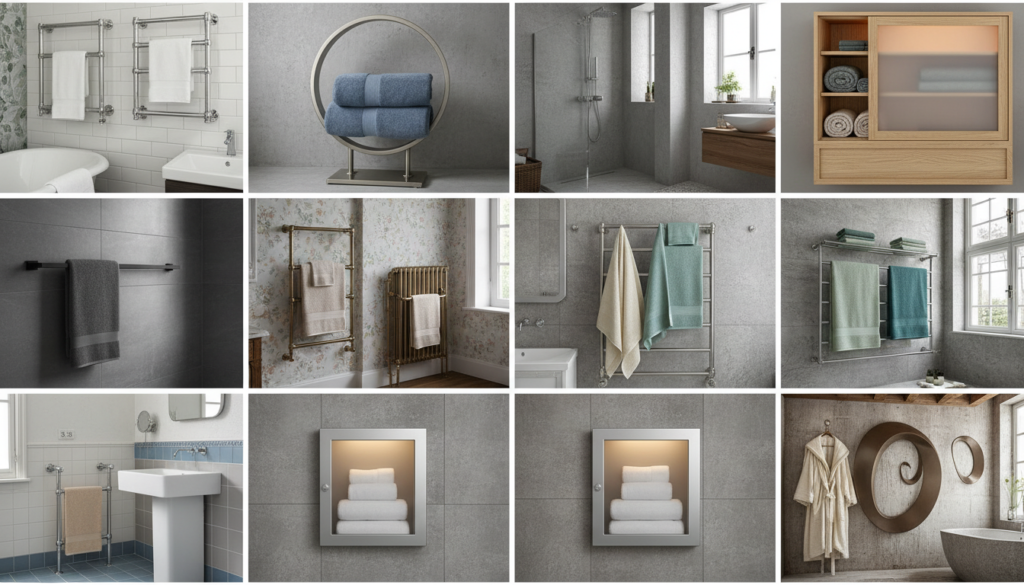
Key Factors to Consider
Size and Capacity
Consider how many towels you need to warm:
- Small (2-3 bars): Good for 1-2 towels
- Medium (4-6 bars): Handles 2-3 towels
- Large (8+ bars): Perfect for families
Measure your available wall or floor space before purchasing.
Material and Finish
The most common materials include:
- Stainless Steel: Durable and rust-resistant
- Chrome: Sleek look but may show fingerprints
- Brass: Classic appearance, good heat conductor
- Painted finishes: Match your bathroom color scheme
Grade 304 stainless steel offers the best balance of durability and appearance.
Best Features to Look For
- Programmable timers for energy efficiency
- Temperature controls for customized warmth
- Quick heating technology (under 15 minutes)
- Smart home compatibility
- Dual functionality as a space heater
- Rust-resistant finishes for bathroom environments
Premium models offer more features but come at a higher price point. Balance your budget with the features that matter most to you.
Find Your Perfect Towel Warmer
Browse our selection of premium towel warmers with all the top-rated features customers love. Free shipping on orders over $100.
Frequently Asked Questions About Using Towel Warmers
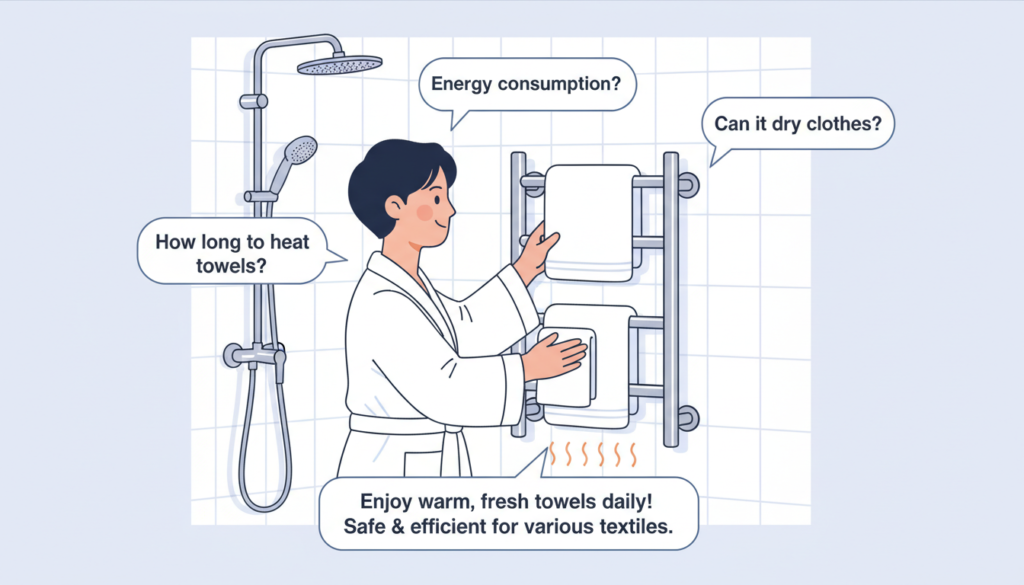
How long should I leave towels on a towel warmer?
For warming dry towels, 20-30 minutes is usually sufficient. For drying damp towels completely, allow 1-2 hours depending on the towel thickness and room humidity. Using a timer can help prevent overheating and save energy.
Can I put wet towels on a towel warmer?
Yes, you can place damp towels on a towel warmer to dry them. However, avoid placing dripping wet towels directly on electric models. Squeeze out excess water first. Towel warmers are designed to dry damp towels, not to function as full dryers for soaking wet items.
Are towel warmers expensive to run?
Most towel warmers use between 40-200 watts, similar to a few light bulbs. Running a 100-watt towel warmer for 3 hours daily costs approximately
Frequently Asked Questions About Using Towel Warmers
How long should I leave towels on a towel warmer?
For warming dry towels, 20-30 minutes is usually sufficient. For drying damp towels completely, allow 1-2 hours depending on the towel thickness and room humidity. Using a timer can help prevent overheating and save energy.
Can I put wet towels on a towel warmer?
Yes, you can place damp towels on a towel warmer to dry them. However, avoid placing dripping wet towels directly on electric models. Squeeze out excess water first. Towel warmers are designed to dry damp towels, not to function as full dryers for soaking wet items.
Are towel warmers expensive to run?
Most towel warmers use between 40-200 watts, similar to a few light bulbs. Running a 100-watt towel warmer for 3 hours daily costs approximately $1-2 per month on average. Using timers and smart controls can reduce this cost even further.
Can a towel warmer be left on overnight?
While most quality towel warmers are designed to operate safely for extended periods, it’s not recommended to leave them on overnight for energy efficiency reasons. Instead, use a timer to warm towels just before you need them. If you must leave it on, ensure it has built-in safety features like automatic shut-off.
Where should I position my towel warmer in the bathroom?
The ideal location is near your shower or bath for easy access when stepping out. Ensure it’s away from direct water contact but close enough to be convenient. Wall-mounted models should be installed at a comfortable height, typically with the bottom bar at least 24 inches from the floor. Always follow electrical code requirements for your area.
-2 per month on average. Using timers and smart controls can reduce this cost even further.
Can a towel warmer be left on overnight?
While most quality towel warmers are designed to operate safely for extended periods, it’s not recommended to leave them on overnight for energy efficiency reasons. Instead, use a timer to warm towels just before you need them. If you must leave it on, ensure it has built-in safety features like automatic shut-off.
Where should I position my towel warmer in the bathroom?
The ideal location is near your shower or bath for easy access when stepping out. Ensure it’s away from direct water contact but close enough to be convenient. Wall-mounted models should be installed at a comfortable height, typically with the bottom bar at least 24 inches from the floor. Always follow electrical code requirements for your area.
Final Thoughts on Using Your Towel Warmer
A towel warmer adds comfort and luxury to your daily routine when used correctly. Remember that the primary purpose is to efficiently dry and warm your towels, preventing mildew while providing that spa-like experience at home.
By following proper towel placement techniques, using energy-saving timers, and maintaining your unit with regular cleaning, you’ll enjoy the full benefits for years to come. Whether you choose a simple plug-in model or a sophisticated hardwired system with smart controls, the right towel warmer can transform your bathroom experience.
Start with the basics outlined in this guide, and soon using your towel warmer will become a natural part of your routine that you’ll wonder how you ever lived without.
Ready to Upgrade Your Bathroom Experience?
Transform your daily routine with a premium towel warmer. Choose from wall-mounted, freestanding, or custom models to match your bathroom perfectly.